

Introduction to palm olein frying:
Palm olein frying plays a central role in modern food processing industries. From snack manufacturing to fast-food chains, it has become one of the most reliable frying methods due to its stability at high temperatures and its durability under repeated use.
Thank you for reading this post, don't forget to subscribe!Unlike many highly unsaturated vegetable oils, palm olein maintains structure during prolonged heating. As a result, it produces consistent frying performance, better oil life, and improved product quality.
In this article, we will explore its history, composition, behaviour, frying applications, health impact, and scientific perspective in a simple but technically accurate way.
History of palm olein frying:
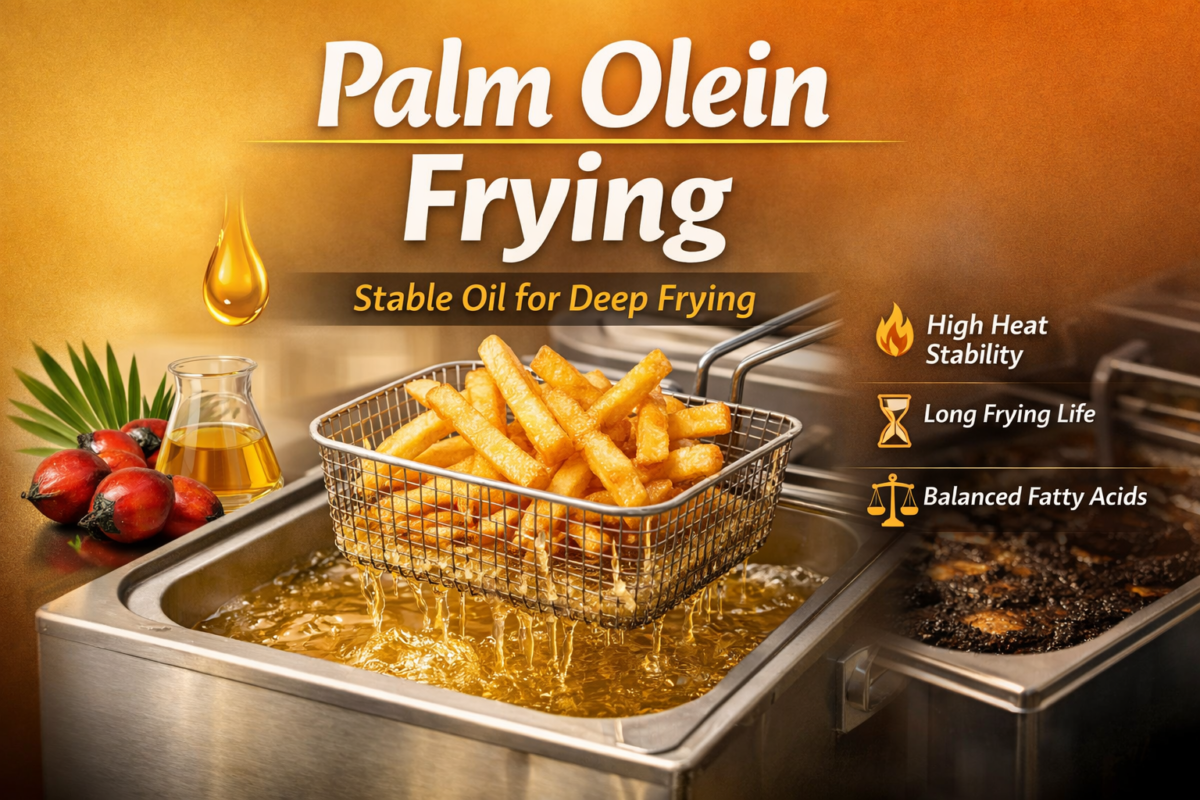
Palm oil originated from the fractionation of crude palm oil. This process separates the liquid fraction(olein) from the solid fraction(stearin). Over time, food industries realized that this liquid fraction performs exceptionally well in high-temperature cooking.
Initially, it was used in tropical regions with high palm oil production. However, as global snack and fast-food industries expanded, palm olein frying became a standard choice due to its:
- Availability in large commercial industries
- Excellent shelf stability in warm climates
- consistent frying behaviour under industrial conditions
Today, this is the most widely used frying oil globally.
Fatty acid composition of palm oil:
The performance of palm oil frying is strongly linked to its fatty acid composition. It contains a balanced mix of saturated and unsaturated fatty acids.
Typical composition includes:
- Palmitic saturated:39-45%
- Oleic acid (monounsaturated): 39-45%
- Linolenic acid (polyunsaturated): 10-13%
- Minor fatty acids and natural antioxidants
This balanced structure is the key reason it performs better under heat than oil rich in polyunsaturated fats, such as soybean or sunflower.
The moderate level of unsaturation reduces oxidation speed, while monounsaturated content supports frying stability.
Why Palm Oil is best for deep frying:
Palm oil frying is preferred in industrial systems because it offers a combination of stability, handling, convenience, and cost efficiency.
Key Reason
- High resistance to thermal oxidation during repeated Frying
- Low formation of polymerized compound compared to PUFA-rich oils
- The semi-liquid nature makes it easy to pump and filter
- Neutral test that does not interfere with the four flavours
- Stable viscosity ensures uniform heat transfer
- Better colour retention in fried products
Because of these properties, it performs consistently in both batch and continuous frying systems.
Types of deep frying suitable for palm olein
Palm olein frying is not limited to one type of process. It performs well across multiple industrial frying methods.
Applications:
- Continuous industrial Frying system (snack factories)
- Batch frying ( restaurant and small plants)
- Deep frying of French fries and potato chips
- Fish frying in commercial food chains
- Frying of chicken nuggets and coated meat products
- Extruded snacks frying( corn and potato-based snacks)
- Intermittent Frying system with oil reuse cycles
Because of its stability, it adapts well to both high-volume and small-scale frying operations.
Oxidative resistance of palm oil:
One of the strongest advantages of olein frying is its oxidative resistance.
During deep frying, oil reacts with the oxygen, water, and food particles. In many oils, this leads to rapid breakdown and off-flavour formation. However, palm oil resists the process more effectively.
key mechanism
- Lower polyunsaturated fat reduces oxidation sites
- Natural tocopherols act as a mild antioxidant
- Balanced fatty acid structures slow degradation
As frying continues, indicators like free fatty acid and polar compounds increase gradually, not abruptly. This control degradation behaviour makes it suitable for long industrial runs.
Maximum Frying Cycle( practical reality):
There is no fixed number of times palm olein frying oil can be reused. Instead, industries rely on quality parameters.
However, in practical industrial operation.
- Oil life depends on temperature (usually 170-190 degrees Celsius )
- Food type significantly affects the degradation rate
- Filtration and topping up extend oil life
- Water content accelerates breakdown
Control indicators:
- Total Polar compound (TPC): commonly discovered at around 25%
- Free fatty acid (FFA): rising trend indicates degradation
- Dark colour and smoke formation
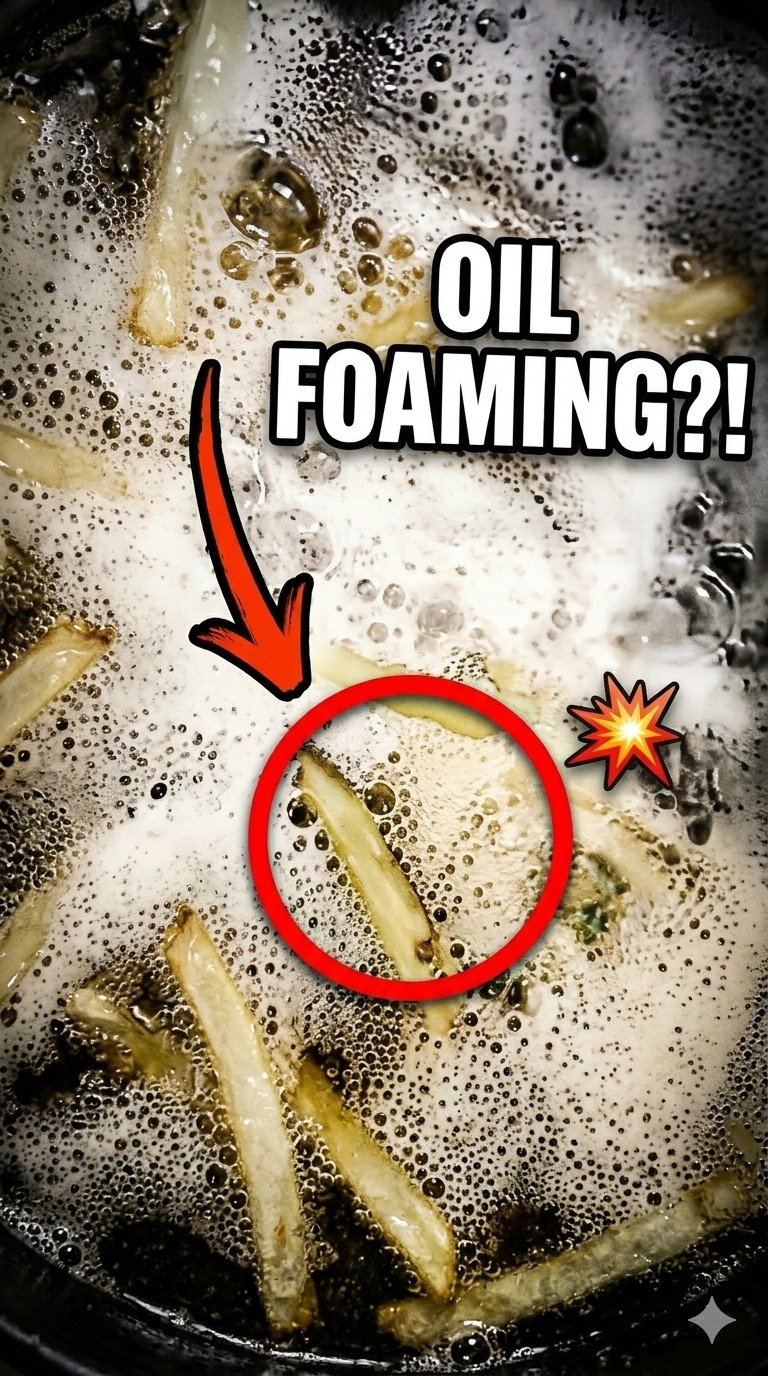
- foaming during frying
- So instead of counting the “fry numbers,” the modern system depends upon laboratory and sensory control
Research-based findings of palm olein frying
Scientific study on repeated Frying shows clear trends:
- Oxidation markers increase gradually with reuse cycles
- Acid decreases faster than folic acid
- Viscosity and colour increase over time
- Polymer formation remains relatively controlled compared to PUFA oils
Clinical research comparing dietary oils also shows that palm olein does not significantly worsen cholesterol markers when consumed in normal dietary conditions. However, overall diet quality remains the key factor.
health benefits of palm olein frying:
Palm olein is not ” health food, “but it offers certain practical advantages in controlling frying systems.
Health-Related points:
- contain no cholesterol (plant- based oil)
- More stable under heat, reducing the formation of extreme oxidation compounds
- Balanced diet fatty acid profile compared to highly unsaturated oils
- Provide consistent flying without rapid degradation
- suitable for controlled industrial production
- Its main benefit is stability, which indirectly supports better-controlled fried food quality
Side effects and concerns:
Despite its advantages, palm oil also has limitations when misused
- Overheating leads to oxidation products
- Repeated uncontrolled reuse increases polar compounds
- Fried for the still contain high calories and fat
- Excess consumption may contribute to weight gain
- Poor oil management can produce harmful compounds
Therefore, oil quality is more important than oil itself.
WHO guidelines on frying oils and fats:
According to WHO dietary recommendations:
- Total fat intake should remain below 30% of daily energy intake.
- Saturated fats should stay below than 30%
- trans fat should be less than 1%
- Fried and ultra-processed food should be limited
WHO also encourages replacing unhealthy fats with unsaturated fats and maintaining balanced cooking practices.
These guidelines highlight that even stable oils like palm olein should be used in moderation within a balanced diet.
Final recommendation
Palm olein frying remains one of the most practical choices for industrial and commercial deep frying. Its stability, cost efficiency, and long frying life make it highly suitable for large-scale food production.
However, its performance depends heavily on proper oil management. Regular monitoring of polar compounds, free fatty acids, and sensory quality ensures safe and consistent results.
In conclusion, palm olein is not just a frying oil; it’s a controlled industrial tool. When managed correctly, it delivers consistent quality, longer oil life, and reliable frying performance.
FAQ’s
1. Is palm olein good for deep frying?
Yes, it is widely used due to its stability, long shelf life, and neutral taste.
2. How many times can palm olein be reused?
There is no fixed number; reuse depends on TPC levels and oil quality indicators.
3. Why does palm olein last longer in frying?
Because it has lower polyunsaturated fat and better oxidative stability.
4. Is Palm olein healthy?
It is safe in controlled use, but fried food should still be consumed in moderation.
5. What is the main indicator of oil degradation?
Total Polar Compound (TPC) and free fatty acids (FFA) are the most important indicators.
Многие пожилые люди отмечают значительное улучшение самочувствия благодаря интервальное голодание после 60 лет.
Обсуждение с доктором позволяет минимизировать риски и выбрать подходящий режим.
**Раздел 2. Потенциальная польза интервального голодания для людей старшего возраста**
Интервальное голодание может способствовать нормализации веса у пожилых, снижая нагрузку на суставы и сердечно-сосудистую систему. Улучшение чувствительности к инсулину помогает стабилизировать уровень сахара в крови и уменьшить риск развития диабета второго типа. Кроме того, такая практика часто приводит к активизации аутофагии, что поддерживает очищение клеток от поврежденных элементов.
Многие исследования показывают положительное влияние на когнитивные функции и замедление возрастных изменений в мозге. Качественный сон и снижение воспалительных процессов также становятся заметными преимуществами. Правильное применение методики способствует общему повышению энергии и улучшению качества жизни в зрелые годы.
Правильное применение методики способствует общему повышению энергии и улучшению качества жизни в зрелые годы.
**Раздел 3. Возможные риски и противопоказания для пожилых**
Несмотря на возможные преимущества, интервальное голодание несет риски для пожилых людей, особенно при наличии хронических заболеваний. Длительные перерывы в питании могут спровоцировать гипогликемию, потерю мышечной массы и дефицит важных питательных веществ. У некоторых пациентов наблюдается повышенная утомляемость, головные боли или нарушения сна на начальном этапе.
Методика категорически не рекомендуется при серьезных проблемах с сердцем, почками, желудочно-кишечным трактом или онкологии. Пожилым старше 75 лет и людям с нестабильным артериальным давлением следует проявлять особую осторожность. Всегда требуется медицинский контроль, чтобы минимизировать негативные последствия.
Практика строго запрещена при выраженных патологиях сердца, почек, пищеварения или онкологических процессах.
**Раздел 4. Рекомендации по безопасному внедрению интервального голодания**
Начинать интервальное голодание пожилым лучше с мягких схем, таких как 12/12 или 14/10, постепенно увеличивая интервалы под контролем специалиста. Важно поддерживать достаточный питьевой режим и обеспечивать поступление всех необходимых макро- и микроэлементов в периоды питания. Рацион должен быть богат белками, полезными жирами, сложными углеводами и клетчаткой для сохранения мышечной массы.
Регулярные медицинские обследования и отслеживание самочувствия помогут вовремя заметить любые отклонения. Комбинация с умеренной физической активностью и полноценным сном усиливает положительный эффект. Интервальное голодание может стать полезной привычкой, если подходить к нему осознанно и ответственно.
Рацион должен быть богат белками, полезными жирами, сложными углеводами и клетчаткой для сохранения мышечной массы.
(Общая длина статьи — около 1450 символов с пробелами.)
Если вы хотите барный стул на заказ, наш магазин предложит вам лучшие варианты и уникальный дизайн.
Москва предлагает множество вариантов барных стульев с уникальным дизайном, чтобы каждый мог подобрать идеальный для себя.
Если вы хотите барный стул на заказ, обращайтесь к нам — у нас огромный выбор стильных и качественных моделей!
Барные стулья дизайнерского исполнения обладают эстетической привлекательностью и удобством.
Нужен надежный вызвать эвакуатор в любое время суток?
Неисправность мотора, севший аккумулятор или авария нередко не дают автовладельцу двигаться дальше своими силами.
Быстрота работы компаний дает возможность автовладельцам не простаивать долгое время у дороги.
Специальные предложения и бонусы для регулярных клиентов делают эвакуацию более выгодной.
Помимо этого, работа без перерывов дает шанс на помощь круглые сутки, даже в праздничные дни и ночью.
Если вы хотите дизайнерские барные стулья купить, наш магазин предлагает широкий выбор стильных и качественных моделей.
Оперативная доставка позволяет получить заказ в кратчайшие сроки и в идеальном состоянии.
Если вы хотите дизайнерские барные стулья купить в Москве, наш магазин предлагает лучшие модели по доступным ценам.
Важно ознакомится с отзывами клиентов и убедиться в надежности изделия перед покупкой.