
Edible Oil Peroxide Iodine Bleaching Deodorization
Edible oil processing, such as edible Oil Peroxide Iodine, is a global industry that handles over 200 million metric tons of seeds and nuts each year. It relies on a series of connected stages to transform raw materials into refined, consumable oils.
Thank you for reading this post, don't forget to subscribe!This essay explains how each stage supports consistent, high-quality oil production and why sequencing is essential for such a large-scale industry.
From extraction to refining, each stage directly impacts the final oil quality. Every step aims to ensure edible oils are safe and of high quality.
Oil extraction starts the process. Mechanical pressing and solvent extraction each offer specific advantages and impact later process stages.
Following extraction, filtration removes impurities and prepares the oil for refining. This process is essential for achieving the purity necessary for the following processing stages.
After filtration, measuring peroxide and iodine values provides insight into oil quality and stability. These measurements guide adjustments to refining procedures.
With oil quality confirmed by these values, bleaching and deodorization follow to enhance color, flavor, and odor, thereby completing the refining process.
Technological advancements improve processing efficiency and sustainability, supporting the growing global demand.
Recognizing how these processes connect helps optimize production and address consumer preferences. The following sections explain each processing stage.
Overview of Edible Oil Processing: Edible Oil Peroxide Iodine
Edible oil processing begins with raw materials such as seeds, nuts, and fruits, each contributing unique flavors and nutritional profiles.
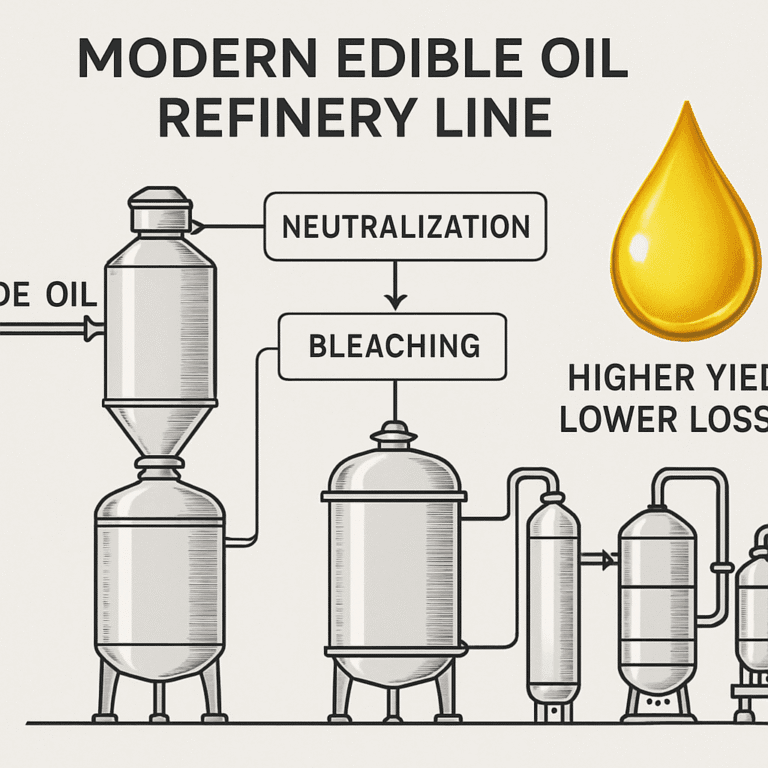
Several stages are necessary to convert raw materials into refined oil. Each stage is designed to improve efficiency and quality, benefitting producers and consumers alike by building on the preceding process.
Key stages in edible oil processing include: Edible Oil Peroxide Iodine,
- Extraction: Using mechanical or chemical methods to extract oil.
- Refining: Removing impurities to improve flavor and stability.
- Bleaching: Removing pigments and residues to enhance visual appeal.
- Deodorization: Refining the aroma and taste through steam distillation.

Extraction is the initial and most critical step. Mechanical pressing and solvent extraction are the primary methods, and the choice directly affects oil yield and quality.
For example, consider Sunshine Oils, a facility that successfully implemented a hybrid extraction method combining mechanical pressing with a light solvent finishing process.
By combining these techniques, Sunshine Oils increased its yield by 15% while maintaining the oil’s natural flavor, demonstrating that blending methods can optimize yields without compromising quality.
The refining process includes degumming and neutralization, each of which requires precision to remove impurities while preserving nutritional value. Careful refinement is essential for quality assurance.
Consumer demand shapes processing methods, with a focus on health benefits and superior taste. Producers must adapt to these preferences, and quality control at each stage ensures oils are safe and nutritious.
Oil Extraction Methods: Mechanical and Chemical Approaches: Edible Oil Peroxide Iodine
Oil extraction is the first step in edible oil processing. The chosen method significantly impacts product quality and yield, with both mechanical and chemical approaches offering distinct advantages and limitations.
Mechanical pressing is a traditional method that physically crushes seeds, nuts, or fruits to extract oil. This straightforward technique preserves the oil’s natural flavor.
Advantages of mechanical pressing:
- Retains oil’s natural aroma and taste.
- Avoids the use of chemicals, making it more eco-friendly.
- Suitable for small-scale operations.
Despite its benefits, mechanical pressing may not extract all the oil, resulting in lower yields. Its efficiency depends on the raw material used.
Chemical extraction uses solvents to obtain oil and is more efficient, making it common in large-scale production. This method typically yields more oil than mechanical pressing.
Key features of chemical extraction:
- Utilizes solvents like hexane.
- Achieves higher extraction rates.
- Suitable for processing large quantities.
However, chemical extraction can alter oil flavor, and the use of solvents raises environmental and health concerns. Extensive refining is required after extraction to ensure safety and quality.
Selecting an extraction method depends on raw material type, desired oil quality, and production scale. Often, combining mechanical and chemical methods optimizes results.
The chosen method affects both oil characteristics and nutritional value. Careful selection ensures the extracted oil meets consumer demands and industry standards.
The Role of Oil Filtration Systems in Purification:
After extraction, oil purification is essential for product quality. Filtration systems remove solid impurities and improve clarity. The chosen filtration method directly affects oxidative stability and shelf life, helping maintain oil freshness and quality.
Effective filtration extends oil shelf life and preserves taste by preventing oxidative spoilage. Methods such as gravity filtration, centrifugal separation, and vacuum filtration vary in effectiveness.
For example, centrifugal separation may extend oxidative stability by several days, while vacuum filtration can do so for weeks, depending on oil type and conditions.
Quantifying these impacts supports business decisions and aligns with production performance metrics.
There are various filtration techniques used in the industry:
- Gravity filtration: Removes large particles using gravitational force.
- Centrifugal separation: Uses centrifugal force to separate impurities.
- Vacuum filtration: Employs a vacuum to draw oil through a filter medium.
Each method offers specific advantages: gravity filtration is cost-effective and simple; centrifugal separation is faster and more efficient for large operations; and vacuum filtration provides thorough purification for complex refining systems.
The choice of filtration system should align with production needs, taking into account oil type, desired purity, and processing capacity. Advances in filtration technology continue to enhance oil quality.
Efficient filtration ensures the final product meets consumer expectations and regulatory standards. High-quality filtration systems are essential for producing premium edible oils and for successful processing operations.
Understanding Peroxide Value in Edible Oils:
The peroxide value is a key indicator of oil quality, measuring the extent of primary oxidation. High peroxide values indicate the oil may be rancid or aged.
This measure is crucial for both manufacturers and consumers, as it ensures that the oil retains its desired taste and nutritional value.
Peroxide value assessment involves specific analytical methods:
- Titration: Determines peroxide levels using chemical reactions.
- Spectrophotometry: Measures absorbance related to peroxide concentration.
- Analytical kits: Provide quick and user-friendly results.
Each method serves different needs: titration offers accuracy but requires expertise, spectrophotometry is rapid and suitable for large-scale assessments, and analytical kits are ideal for routine checks in smaller operations.
Understanding peroxide values is vital for maintaining oil quality, as they directly impact shelf life and consumer satisfaction. Ensuring low peroxide levels preserves oil safety and taste.
Maintaining low peroxide values is a priority in the competitive edible oil market, as it reinforces consumer trust and product acceptance. Regular testing is a proactive quality control measure.
Iodine Value: Measuring Unsaturation and Oil Quality:
Iodine value indicates the degree of unsaturation in edible oils and is crucial for determining stability and shelf life.
Higher iodine values mean greater unsaturation and potential instability, requiring milder deodorization to prevent polymerization.
Measuring iodine value provides insights that help producers tailor processing methods and handling techniques to optimize quality.
Standard methods for determining iodine value include:
- Wij’s solution method: A classic, reliable approach involving titration.
- Gas chromatography: Offers precise measurement but is complex and costly.
- Portable testers: These provide quick, field-valid estimates.
Each method serves specific needs:
Wij’s method is practical for routine analysis, gas chromatography is best for detailed studies, and portable testers enable on-the-go measurements.
Understanding iodine values informs decisions regarding processing parameters, enabling producers to modify bleaching and deodorization stages to optimize results.
This approach ensures consistent product quality and aligns with consumer expectations.
Regular monitoring and evaluation of iodine values improve oil stability, help preserve nutritional properties, and are essential for maintaining quality and fostering consumer trust in a competitive marketplace.
The Bleaching Process: Removing Pigments and Impurities:
Bleaching is essential in edible oil processing, as it enhances color by removing impurities and pigments. This step significantly improves the appearance and quality of the oil.
Bleaching uses adsorbents that bind unwanted components. Common adsorbents include:
- Activated earth: Effective for pigment and soap removal.
- Activated carbon: Excellent for adsorbing darker impurities.
- Synthetic silica: Favored for its powerful adsorptive properties.
The bleaching process involves heating the oil, adding adsorbents to bind impurities, and then filtering the mixture to separate the purified oil.
Several factors influence the efficiency of bleaching, including:
- Temperature: Higher temperatures boost adsorbent activity.
- Contact time: Extended contact enhances impurity removal.
- Adsorbent quality: High-grade materials ensure effective bleaching.
These factors are critical for successful bleaching. Adjusting them based on oil type and desired outcome optimises clarity and quality.
Bleached oil contains fewer impurities and has an appealing color, making it suitable for cooking, frying, and manufacturing. Improved stability and flavour meet consumer demands.
Selecting the appropriate bleaching technique ensures high oil standards and prepares oils for deodorization and further refining.
This step is vital for producing top-quality edible oils that meet market expectations.
Deodorization: Enhancing Flavor and Odor:
Deodorization is a crucial step in edible oil refining, as it removes unwanted flavors and odors, thereby improving the oil’s sensory qualities.
This process uses steam distillation under high vacuum: the oil is heated, and steam is introduced to strip volatile compounds, thereby reducing undesirable tastes and aromas.
Key components removed during deodorization include:
- Free fatty acids: Cause undesirable smell and taste.
- Aldehydes and ketones: Contribute to off-flavors.
- Peroxides: Indicate oxidation and poor quality.
By Trent Haddock (https://unsplash.com/@trailshutter)
Deodorization conditions are critical; temperature and pressure must be carefully controlled. Higher temperatures ensure effective removal of volatile compounds.
Selecting appropriate deodorizing equipment, such as specialized chambers and steam injectors, maximizes contact between steam and oil.
Efficient deodorization produces oils with a neutral scent and taste, which is especially important for cooking and baking applications where oils should not overpower other ingredients.
Deodorization also extends shelf life by removing oxidation-prone compounds, thereby improving oil stability and consumer appeal.
In conclusion, deodorization is vital for producing market-ready oils. It enhances sensory properties and maintains product integrity. Proper management of this process ensures high-quality output.
Refining Process: From Crude Oil to Edible Oil:
Refining transforms crude oil into a consumable product through a meticulous process that enhances quality and safety by removing impurities.
Degumming, the initial step, eliminates phospholipids and waxes, which are essential for stability. Degumming also enables phospholipid valorization, as lecithin can be recovered as a valuable co-product, generating new revenue streams.
Next, neutralization removes free fatty acids by treating them with caustic soda, converting them into soap for separation.
- Degumming: Removal of gum-like phospholipids and waxes.
- Neutralization: Elimination of free fatty acids using alkali treatments.
By Mahdi Kordi (https://unsplash.com/@mahdikordi_ir)
After neutralization, bleaching involves adding bleaching earth or activated carbon to absorb pigments and residual impurities.
The final significant refining step is deodorization, which removes volatile impurities and provides the oil with a neutral taste and odor.
Final aspects to consider include:
- Bleaching: Uses adsorbents to remove color and impurities.
- Deodorization: Eliminates volatile compounds affecting taste and smell.
Refining is essential for producing safe, palatable oils. Each stage targets specific contaminants, collectively transforming crude oil into a high-quality edible product.
Refining efficiency affects both economic and environmental outcomes. Modern techniques aim to reduce energy use and waste, making sustainability increasingly crucial for the industry.
Quality Control and Safety in Edible Oil Processing:
Ensuring the quality and safety of edible oils is paramount. Each processing stage includes rigorous checks, such as peroxide and free fatty acid (FFA) testing.
To enhance monitoring, adopting real-time data practices and implementing continuous inline sensors for peroxide and FFA can shift quality control from batch testing to constant monitoring.
This approach improves response times, ensures consistent product quality, and provides a competitive advantage.
Quality control relies on precise testing, with laboratories assessing peroxide and iodine values to determine oxidation levels and unsaturation.
These assessments are vital for maintaining oil integrity.
Key aspects of quality assurance include:
- Peroxide Testing: Evaluates primary oxidation.
- Iodine Value Measurement: Determines unsaturation.
- Contaminant Screening: Identifies impurities and ensures compliance.
Safety protocols must comply with strict regulations to prevent contamination and ensure safe consumption. Consistent monitoring and adherence to standards are essential for success.
Thorough documentation supports transparency and accountability, reinforcing trust in both the product and its producers. Building consumer confidence drives industry progress.
Quality control and safety are ongoing commitments that require dedication to excellence and public health. Prioritizing these principles advances the industry toward a secure future.
Technological Innovations and Sustainability in Oil Processing: Edible Oil Peroxide Iodine,
The edible oil industry is evolving rapidly, with technological advancements enhancing efficiency and sustainability.
Integrating automation and digital technologies can reduce operational costs by up to 20% and increase production efficiency by up to 15%, making sustainability a strategic priority.
Automation and digital technologies streamline operations by minimizing human intervention, reducing errors, and increasing precision.
This shift results in consistent product quality and higher productivity.
by Patricio Davalos (https://unsplash.com/@patriciodavalos)
Sustainability is a key focus, with the industry adopting eco-friendly practices, such as energy-efficient processes and waste-reduction techniques.
These measures support environmental conservation.
Important innovations driving sustainable oil processing include:
- Energy-Efficient Equipment: Reduces operational costs and carbon footprint.
- Renewable Energy Sources: Incorporates solar and wind power.
- Advanced Filtration Systems: Improve waste management and oil purity.
Research and development further refine these technologies. Collaborations between academia and industry drive advancements and yield innovative solutions to longstanding challenges.
Consumers increasingly prefer brands with sustainable credentials. Thus, sustainability becomes a competitive advantage for oil producers.
In conclusion, integrating technology and sustainability is transformative, positioning the edible oil industry for future growth.
Continued innovation ensures the sector remains agile and environmentally conscious, meeting the needs of both producers and consumers.
Regulatory Standards and Consumer Preferences:
Regulatory standards are essential in the edible oil industry, ensuring oils are safe and of high quality. Compliance is mandatory for producers.
These regulations vary globally but generally focus on purity, labeling, and nutrition information.
Consistency with international standards helps maintain market access. Consumer preferences are also changing, with a shift toward healthier oils.
People seek products with lower trans fats and better nutritional profiles, and the environmental impact increasingly influences consumer choices.
To meet these demands, producers focus on:
- Reducing Trans Fats: Achieving healthier formulations.
- Transparent Labeling: Providing clear, accurate information.
- Sustainable Practices: Emphasizing eco-friendly production processes.
Producers must adapt to these trends to avoid losing market share. Understanding consumer demands and adhering to standards position brands favourably and foster trust among health-conscious consumers.
In summary, aligning production practices with regulations and consumer needs is essential for ensuring product quality and maintaining a competitive advantage.
The future of edible oils depends on blending compliance with consumer-focused strategies.
Conclusion: Future Trends in Edible Oil Processing: Edible Oil Peroxide Iodine,
The future of edible oil processing presents both opportunities and challenges. Emerging trends will shape global production and consumption, making it vital for industry leaders to stay ahead.
Sustainability will remain central, involving waste reduction and improved energy efficiency. Companies are prioritising eco-friendly practices as standard in processing.
Technology will drive change, with innovations such as automation and digital monitoring transforming efficiency and ensuring consistent product quality.
Consumer demands will increasingly influence processing methods, with greater awareness of health impacts driving a focus on oils with enhanced nutritional profiles.
Future trends to watch include:
- Eco-friendly Technologies: Reducing carbon footprints.
- Healthier Oil Alternatives: Meeting health-conscious demands.
- Advanced Filtration Systems: Improving oil purity and shelf life.
In conclusion, staying informed about these trends is crucial. Companies that embrace change and adapt quickly to new demands will lead the industry.
Edible oil processing is at a pivotal moment. Implementing the proper strategies will ensure a sustainable and prosperous future for the industry.
Innovation and flexibility will be key to ongoing success.