
Introduction:
The foaming issue in cooking is something almost every fryer operator has seen, but very few fully understand. At first, it looks like a minor surface problem. However, in reality, it often signals deeper chemical and operational issues inside the oil.
Thank you for reading this post, don't forget to subscribe!During frying, oil operates under harsh conditions, typically between 150-90 °C. At the same time, food releases moisture, fine particles, and natural compounds into the oil.
As this continues, the oil begins to degrade through oxidation, hydrolysis, and polymerization.
Consequently, these reactions gradually change the oil’s behaviour, and one of the earliest visible signs is foam formation.
In industrial frying, this problem becomes even more critical. Not only does foam reduce heat transfer efficiency, but it also affects product colour, texture, and oil life.
Therefore, understanding and controlling the foaming issue in cooking is essential for both quality and cost control.
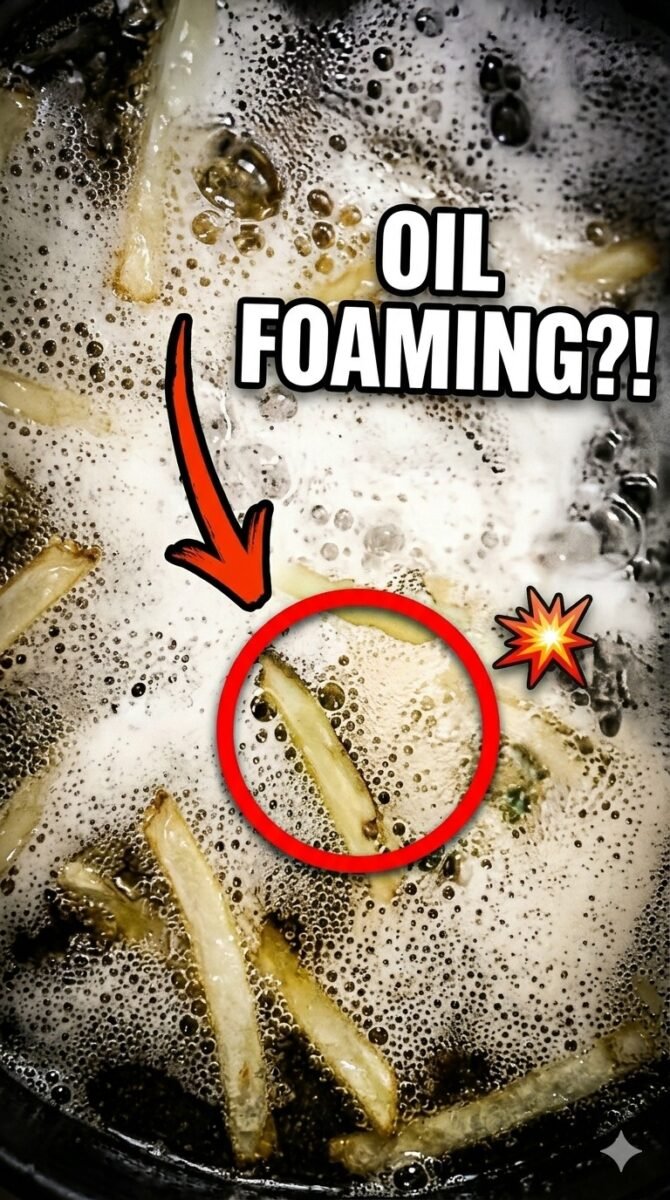
Foaming issue in cooking: the main cause in frying oil
Foaming issue in cooking due to moisture and food contamination
First of all, moisture plays a major role. When wet food enters hot oil, water instantly converts into steam. As a result, bubbles form rapidly. At the same time, small food particles-such as crumbs, starch, and proteins- remain suspended in the oil.
Over time, these particles do not simply disappear. Instead, they accumulate and start interfering with oil stability. Because of this, the oil begins to hold bubbles longer, which leads to persistent foam.
Foaming issue in cooking due to oil degradation
In addition, oil itself changes during frying. As heating continues, triglycerides start breaking down. This process produces free fatty acids, partial glycerides and oxidation products.
These compounds behave like natural surfactants. In simple terms, they reduce surface tension. Because of that, bubbles do not burst easily. Instead, they stay on the surface and form foam.
Foaming issue in cooking due to poor oil quality
Another important factor is the initial quality of oil. If already contains high free fatty acids, residual gums, or impurities, it will foam much faster.
So, even before frying starts, the iol condition determines how stable the system will be. In short, weak oil leads to early failure.
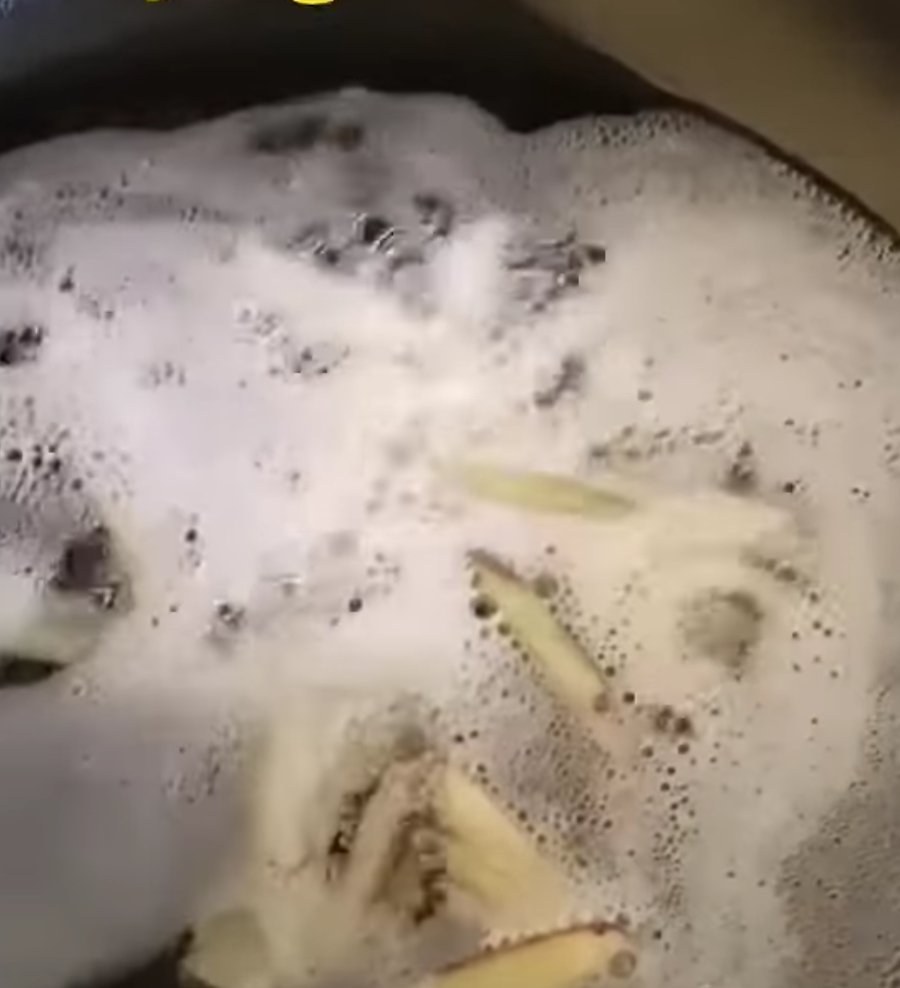
Quick summary of causes
- Moisture from food
- Suspended crumbs and particles
- Free fatty acids formation
- Residual phospholipids(gums)
- Oxidation and polymerisation products
Role of phosphatides and deguming
Hydratable and non-hydratable phosphatides removal
Now let’s move to the most overlooked factor, phosphatides.
Crude oil naturally contains phospholipids, also called gums. These are divided into;
- Hydratable phosphatides
- non-hydratable phosphatides (NHP)
Thus, hydratable phospholipids can be removed easily by adding water. However, non-hydratable phosphatides are more stubborn. Therefore, refineries used acid (like phosphoric acid) to convert them into a hydratable form.
Only after this conversion can they be removed effectively.
Foaming issue in cooking is linked with poor degumming
If degumming is incomplete, some phosphatides remain in the oil. Later, during frying, these compounds act like emulsifiers.
Because of this:
- They stabilise air bubbles
- They increase foam persistence
- They reduce oil performance.
So, improper removal of hydratable and non-hydratable phosphatides directly contributes to the foaming issue in cooking.
Degumming methods comparison
| alkali neutralisation | Target | Result | Impact on foaming |
| water degumming | hydratable gum | all phospholipids | moderate improvement |
| acid degumming | non-hydratablr gums | better conversion & removal | strong improvement |
| enzymatic degumming | all phospholipids | high efficiency | best performance |
| alkali neutralization | FFA+residual gums | further purification | supports stability |
Technical insight: chemical reaction behind foam
Hydrolysis and soap formation
Chemistry explains foam clearly.
During frying:
- Triglycerides break down to form fatty acids
- Free fatty acids react with alkali =from soap
Reaction
RCOOH+NaOH = RCOONa+H2O
Soap behaves as a surfactant. Therefore, it stabilises bubbles and promotes foam formation.
Oxidation and polymerisation effects
at the same time. Oxidation produces the following:
- peroxide
- Aldehydes
- polymers compounds
These compounds make the oil thicker and more viscous. As a result, bubbles become stronger and last longer.
Technical insight: temperature and operational control
Temperature control is often underestimated.
Even within normal frying range:
- High temperature accelerates degradation
- Longer frying time increases breakdown
- Overloading introduces more moisture
Therefore, stable temperature and controlled operation are essential to prevent foam.
Research-based data: why proper refining matters
A study on degumming showed that;
- Water degumming reduced phosphorus to 111mg/kg
- Enzymatic degumming reduced it to 35mg/kg
- target level for refined oil:10mg/kg
What this means practically
- lower phosphorus=fewer phosphatides
- Fewer phosphatides=less foam risk
- Better refining = better frying stability
Technical insight: animal fat adulteration and foam
Effect of lauric fats and adulteration
Adulteration can also influence foaming behaviour.
For example;
- Coconut oil and palm kernel oil contain lauric acid
- These fats behave differently during heating
If mixed improperly with animal fats (like lard), they can:
- change melting profile
- Affect oil stability
- Increase unexpected foam
So, when foam appears suddenly, competition should always be checked.
Industrial solutions for the foaming issue in cooking
Refinery-level control
- Remove hydratable phosphatides (water degumming)
- Convert and remove non-hydratable phosphatides(acid treatment)
- Reduce proper beaching and filtration
fryer-level control
- Maintain clean oil (regular filtration)
- Remove crumbs continuously
- Avoid wet product loading
- Control temperature strictly
- Replace oil before heavy degradation
Quality control checklist
| Parameter | Importance | Effect |
| free fatty acid | shows oil breakdown | higher ffa =more foam |
| phosphorus | indicates gums | higher gums= foam |
| peroxide value | oxidation level | high pv = unstable oil |
| insoluble impurities | physical contamination | more particles = foam |
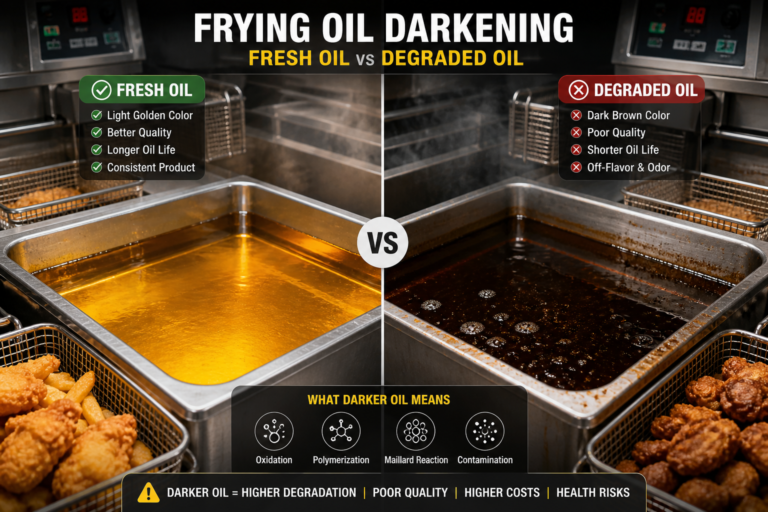
| color | degradation indicator | dark oil = poor quality |
Conclusion:
The foaming issue in cooking is not just a surface defect, it is a clear signal of oil degradation and poor process control.
While moisture and crumbs play their role, the real drivers are chemical changes inside the oil, especially free fatty acids, oxidation products, and residual phosphatides.
Therefore, the solution must start with refining and continue through proper frying management.
When hydrotatable and non-hydrotatable phosphatides are removed effectively, and fryer conditions are controlled carefully, foam can be minimized significantly.
In the end, controlling foam is not about reacting to the problem; it is about preventing it through better oil quality and smarter process control.
FAQs:
- What causes foaming issues in cooking oil?
The foaming issues in cooking mainly occur due to moisture, food particles, free fatty acids, and oxidation products. These compounds act like surfactant amd stablize bubbles.
2. How do phosphotides increase foaming?
If hydratable and non-hydratable phosphatides are not removed properly during degumming, they remain in the oil and promote foam formation during frying.
3. How can I control foaming issues while cooking?
You can control the foaming issue in cooking by using refined oil, maintaining proper temperature, filtering regularly, and avoiding excess moisture in food.
Does high prefeat acid increase form formation?
Yes, high preferences lead to soap formation, which stabilizes bubbles and increases the foaming issues in cooking.
4. Why does used oil form more than fresher?
Used all contain oxidation products, polymers, and impurities, and it shows more foam compared to fresh oil.
5. Can temperature affect forming?
Yes, higher temperatures accelerate oil degradation, which increases the foaming issues in cooking over time.
6. Does adulteration affect forming behaviour?
Adulteration with lauric fats or animal fats can change oil stability and increase foam formation during frying.
7. When should frying oil be replaced?
All should be replaceable when foam becomes resistant, colour darker, and quality parameters and quality parameters exceed acceptable limits.